

Why companies should invest in referral programs
A referral program is a system that rewards existing customers for bringing in new ones. It turns word-of-mouth recommendations into a structured marketing channel and helps companies grow through customer trust.
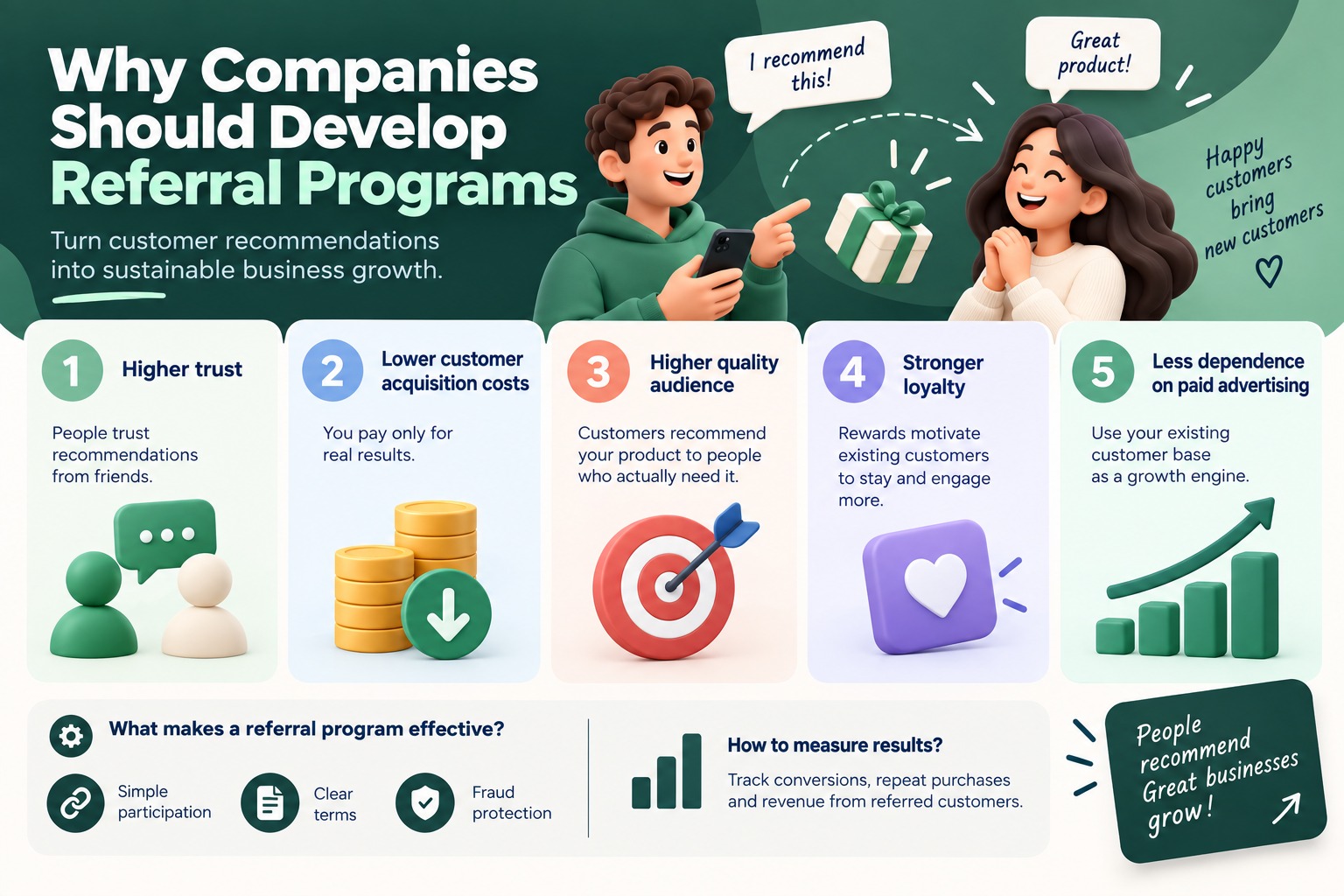
Why referral programs work
The main advantage of referrals is trust. Advertising is naturally seen as a message from a brand trying to sell something, while a recommendation from someone you know is based on personal experience. As a result, potential customers may be more willing to explore a product and make a purchase.
Referral programs can also help reduce customer acquisition costs. Rewards are usually issued only after a specific action, such as signing up, making a first purchase, paying for a service, or completing another predefined step. This can make acquisition costs more predictable than paid advertising, where companies spend money before knowing whether a customer will convert.
Another benefit is audience quality. Customers are more likely to recommend a product to people who may genuinely find it useful. Instead of attracting random traffic, the company can reach potential buyers who already have some level of interest.
How referral programs support customer loyalty
Referral programs are not only about acquiring new customers. A reward for making a recommendation gives existing customers another reason to engage with the brand and can encourage them to return.
Two-sided referral programs can be especially effective because both the existing customer and the new customer receive a benefit. This could be a discount, loyalty points, cashback, a free service, account credit, or another valuable incentive.
Reducing dependence on paid advertising
A referral channel can reduce a company’s reliance on paid advertising platforms by turning its existing customer base into a source of growth.
At the same time, referral programs generate useful first-party insights. Companies can learn which offers attract the most interest, which incentives perform best, and which referrals are most likely to result in a purchase.
As privacy requirements become stricter, data collected directly through customer relationships is becoming increasingly valuable. However, companies should collect and use this information transparently and in accordance with applicable privacy and data protection laws.
What makes a referral program effective
Participation should be as simple as possible. A personal referral link or promo code makes it easy for customers to share an offer without going through a complicated registration process or following lengthy instructions.

The program’s terms should clearly explain what action qualifies for a reward, when the reward becomes available, and what restrictions apply. Companies also need safeguards against duplicate accounts, fraudulent purchases, self-referrals, and other forms of abuse.
Asking participants to provide someone else’s phone number or email address should generally not be a required part of the process. A safer approach is to give customers a referral link or promo code that they can share directly, allowing the new customer to choose whether to use it.
Companies should also consider applicable consent, privacy, and marketing communication requirements before sending promotional emails or messages or processing personal contact information.
How to measure results
The number of invitations sent does not say much about a program’s actual performance. More useful metrics include referral conversion rate, customer acquisition cost, average order value, repeat purchases, customer retention, and revenue generated by referred customers.
Another important metric is repeat referrals. If customers who joined through a referral later start referring other people themselves, the program can create a sustainable growth cycle.
A referral program can become a reliable complement to paid marketing. It can help companies attract more relevant customers, strengthen loyalty, control acquisition costs, and build valuable first-party customer data.
The strongest programs usually combine a simple user experience, a clear benefit for both sides, transparent rules, and regular performance measurement.